This week’s Come Follow Me for Teens Study & Teaching Guide helps teens and those who teach them explore the powerful lessons found in 2 Chronicles 14–20; 26; 30.
In these chapters, the people of Judah face moments of peace, pressure, danger, pride, repentance, and deliverance. Asa begins by trusting the Lord and teaches us that God can help those who have no power. Micaiah stands alone for truth when hundreds of other voices tell the king what he wants to hear. Jehoshaphat faces an overwhelming enemy army and offers one of the most honest prayers in scripture: “Neither know we what to do: but our eyes are upon thee.”
This guide helps youth focus on three powerful principles:
“The Lord Is with You, While Ye Be with Him”
How Asa’s story teaches teens to rely on the Lord in both peaceful times and pressured times. Asa trusted God when a massive army came against Judah, but later relied on worldly strength instead of turning first to the Lord. His story helps teens see that trusting God is not something we do only once. We have to keep choosing to rely on Him, especially when fear, pressure, anxiety, or easier solutions pull at our hearts.
“There Is Yet One Man”
How Micaiah’s courage teaches teens to stand for truth when it is unpopular. Surrounded by 400 voices telling King Ahab what he wanted to hear, Micaiah chose to speak what God revealed. His story helps youth recognize the difference between flattering voices and faithful voices, and invites them to care more about God’s truth than the approval of the crowd.
“Neither Know We What to Do: But Our Eyes Are upon Thee”
How Jehoshaphat’s prayer teaches youth what to do when life feels overwhelming. When Judah was surrounded by enemies and had no power to win the battle alone, Jehoshaphat turned his fear toward God. His example helps teens understand that faith does not always mean having every answer. Sometimes faith means honestly admitting, “I don’t know what to do,” while choosing to keep our eyes fixed on Jesus Christ.
This guide is designed to help teens see one central truth:
Jesus Christ is the One we look to when we feel weak, pressured, outnumbered, or uncertain.
Inside this guide:
Full background for the week
3 readiness / object lesson activities
3 complete teaching principles
Exact scripture blocks from the weekly study
Discovery, discussion and journal questions
Expanded teacher-friendly teaching sections
Powerful quotes from Church leaders
Testimony prompts and personal application ideas
Practical application actions for each principle
Christ-centered connections to faith, repentance, healing, obedience, and the word of the Lord
Designed for:
Parents teaching teens at home
Youth Sunday School support
Young Men and Young Women leaders
Seminary-style family discussions
Teens studying Come Follow Me on their own
Teachers wanting a ready-to-use weekly lesson framework
Ideal for:
10–20 minute family gospel lessons
Youth class discussions
One-on-one parent/teen conversations
Personal study during the week
Leaders who want deeper teaching without starting from scratch
This week’s guide points youth to the central message of these chapters:
When we turn our eyes, hearts, and trust toward the Lord, He can give us strength, courage, protection, direction, and peace.
As teens study Asa, Micaiah, Jehoshaphat, Uzziah, and Hezekiah, they will be invited to consider where they turn first when they feel afraid, pressured, tempted, successful, or uncertain. They will see that the Lord can help those who have no power, that truth is worth standing for even when the crowd disagrees, and that God can fight battles we could never win alone.
These chapters remind youth that Jesus Christ is steady when life is not. He gives strength to the weak, courage to those who stand for truth, humility to those who remember Him in success, and direction to those who do not know what to do. As teens turn their eyes to Him, they can find greater peace, confidence, courage, and faith in the battles they face.
This week’s Come Follow Me for Teens Study & Teaching Guide helps teens and those who teach them explore the powerful lessons found in 2 Chronicles 14–20; 26; 30.
In these chapters, the people of Judah face moments of peace, pressure, danger, pride, repentance, and deliverance. Asa begins by trusting the Lord and teaches us that God can help those who have no power. Micaiah stands alone for truth when hundreds of other voices tell the king what he wants to hear. Jehoshaphat faces an overwhelming enemy army and offers one of the most honest prayers in scripture: “Neither know we what to do: but our eyes are upon thee.”
This guide helps youth focus on three powerful principles:
“The Lord Is with You, While Ye Be with Him”
How Asa’s story teaches teens to rely on the Lord in both peaceful times and pressured times. Asa trusted God when a massive army came against Judah, but later relied on worldly strength instead of turning first to the Lord. His story helps teens see that trusting God is not something we do only once. We have to keep choosing to rely on Him, especially when fear, pressure, anxiety, or easier solutions pull at our hearts.
“There Is Yet One Man”
How Micaiah’s courage teaches teens to stand for truth when it is unpopular. Surrounded by 400 voices telling King Ahab what he wanted to hear, Micaiah chose to speak what God revealed. His story helps youth recognize the difference between flattering voices and faithful voices, and invites them to care more about God’s truth than the approval of the crowd.
“Neither Know We What to Do: But Our Eyes Are upon Thee”
How Jehoshaphat’s prayer teaches youth what to do when life feels overwhelming. When Judah was surrounded by enemies and had no power to win the battle alone, Jehoshaphat turned his fear toward God. His example helps teens understand that faith does not always mean having every answer. Sometimes faith means honestly admitting, “I don’t know what to do,” while choosing to keep our eyes fixed on Jesus Christ.
This guide is designed to help teens see one central truth:
Jesus Christ is the One we look to when we feel weak, pressured, outnumbered, or uncertain.
Inside this guide:
Full background for the week
3 readiness / object lesson activities
3 complete teaching principles
Exact scripture blocks from the weekly study
Discovery, discussion and journal questions
Expanded teacher-friendly teaching sections
Powerful quotes from Church leaders
Testimony prompts and personal application ideas
Practical application actions for each principle
Christ-centered connections to faith, repentance, healing, obedience, and the word of the Lord
Designed for:
Parents teaching teens at home
Youth Sunday School support
Young Men and Young Women leaders
Seminary-style family discussions
Teens studying Come Follow Me on their own
Teachers wanting a ready-to-use weekly lesson framework
Ideal for:
10–20 minute family gospel lessons
Youth class discussions
One-on-one parent/teen conversations
Personal study during the week
Leaders who want deeper teaching without starting from scratch
This week’s guide points youth to the central message of these chapters:
When we turn our eyes, hearts, and trust toward the Lord, He can give us strength, courage, protection, direction, and peace.
As teens study Asa, Micaiah, Jehoshaphat, Uzziah, and Hezekiah, they will be invited to consider where they turn first when they feel afraid, pressured, tempted, successful, or uncertain. They will see that the Lord can help those who have no power, that truth is worth standing for even when the crowd disagrees, and that God can fight battles we could never win alone.
These chapters remind youth that Jesus Christ is steady when life is not. He gives strength to the weak, courage to those who stand for truth, humility to those who remember Him in success, and direction to those who do not know what to do. As teens turn their eyes to Him, they can find greater peace, confidence, courage, and faith in the battles they face.

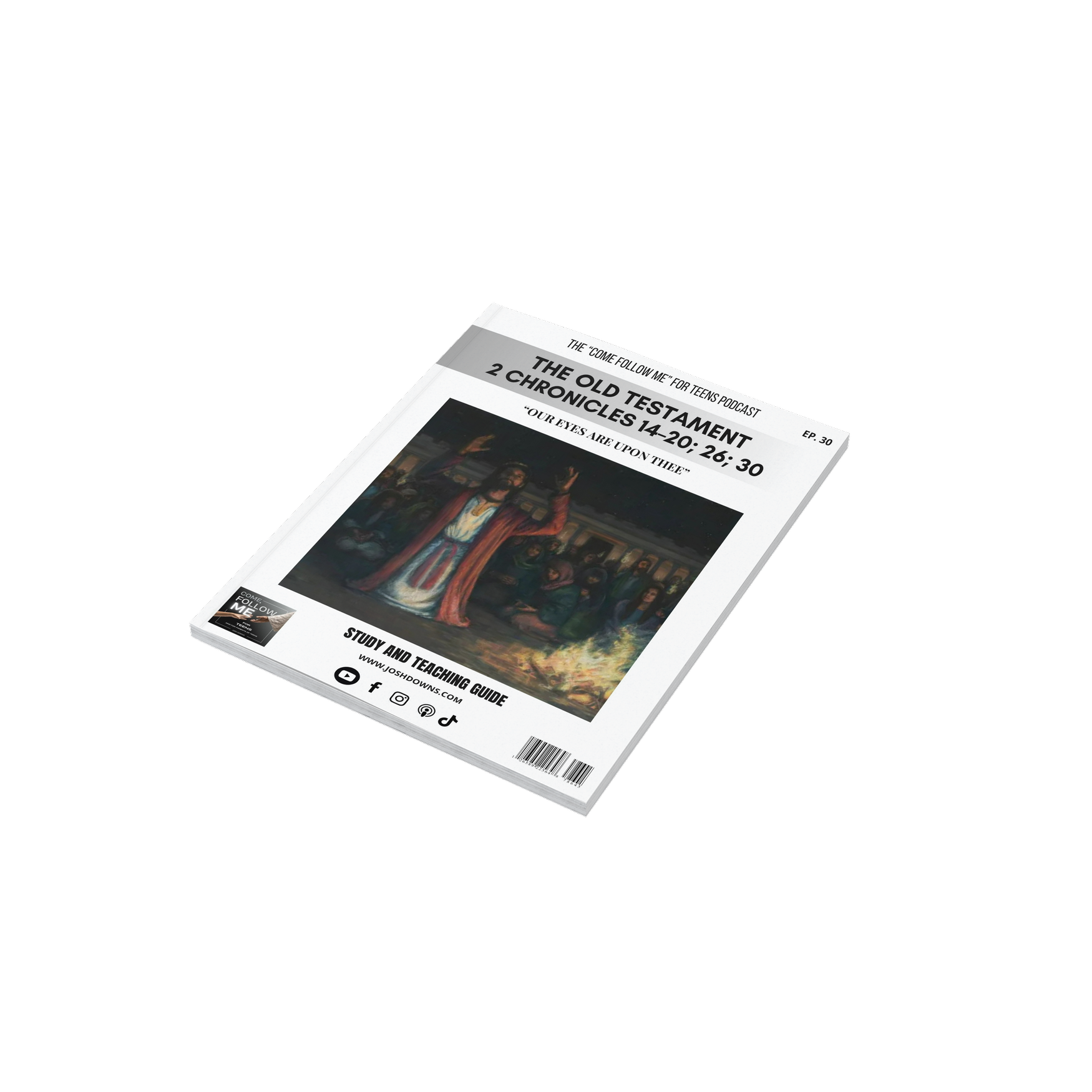 Image 1 of 6
 Image 2 of 6
 Image 3 of 6
 Image 4 of 6
 Image 5 of 6
 Image 6 of 6