Come Follow Me for Teens: "He Shall Direct Thy Paths" (Proverbs and Ecclesiastes)

“He Shall Direct Thy Paths”
This week’s Come Follow Me for Teens episode studies Proverbs and Ecclesiastes and explores what it really means to trust God when we cannot see the whole path, when fear begins influencing our choices, and when the Lord’s timing is different from our own.
We begin with one of the best-known passages in Proverbs:
“Trust in the Lord with all thine heart; and lean not unto thine own understanding.”
—Proverbs 3:5
God expects us to think, seek wisdom, and make thoughtful decisions. But there is a difference between using our understanding and leaning entirely upon it.
Through a memorable connection to Star Wars, the Holland “wrong road” story, and Elder Dieter F. Uchtdorf’s teaching that “the dots will connect,” we talk about why God’s direction may not always make immediate sense. The Lord promises to direct our paths, but He does not promise that every part of the path will be immediately understandable.
Then we explore the scriptural invitation to “fear the Lord.”
Godly fear is not being terrified of Heavenly Father. It means reverencing and trusting Him enough that His voice carries greater weight than the pressures and opinions around us.
Using Alma’s people, who “hushed their fears” by remembering the Lord, and Joseph Smith’s experience with the lost 116 pages, we consider an important question:
What do I sometimes fear more than I fear—or reverence—God?
Finally, Ecclesiastes teaches:
“To every thing there is a season, and a time to every purpose under the heaven.”
Trusting God also means learning to trust His timing and His will.
We discuss Elder Neal A. Maxwell’s teaching that “the issue for us is trusting God enough to trust also His timing,” Joseph Smith’s counsel to “cheerfully do all things that lie in our power,” and the powerful “but if not” faith of Shadrach, Meshach, and Abed-nego.
And we close with Moroni, who faced an uncertain future but still declared:
“I, Moroni, will not deny the Christ.”
Sometimes we will not understand the path. Sometimes we will be afraid. Sometimes we will have to wait.
But Jesus Christ remains worthy of our trust.
What has your own life already taught you about whether He can be trusted?
This is much closer to the length I’d standardize for the Squarespace podcast posts going forward.
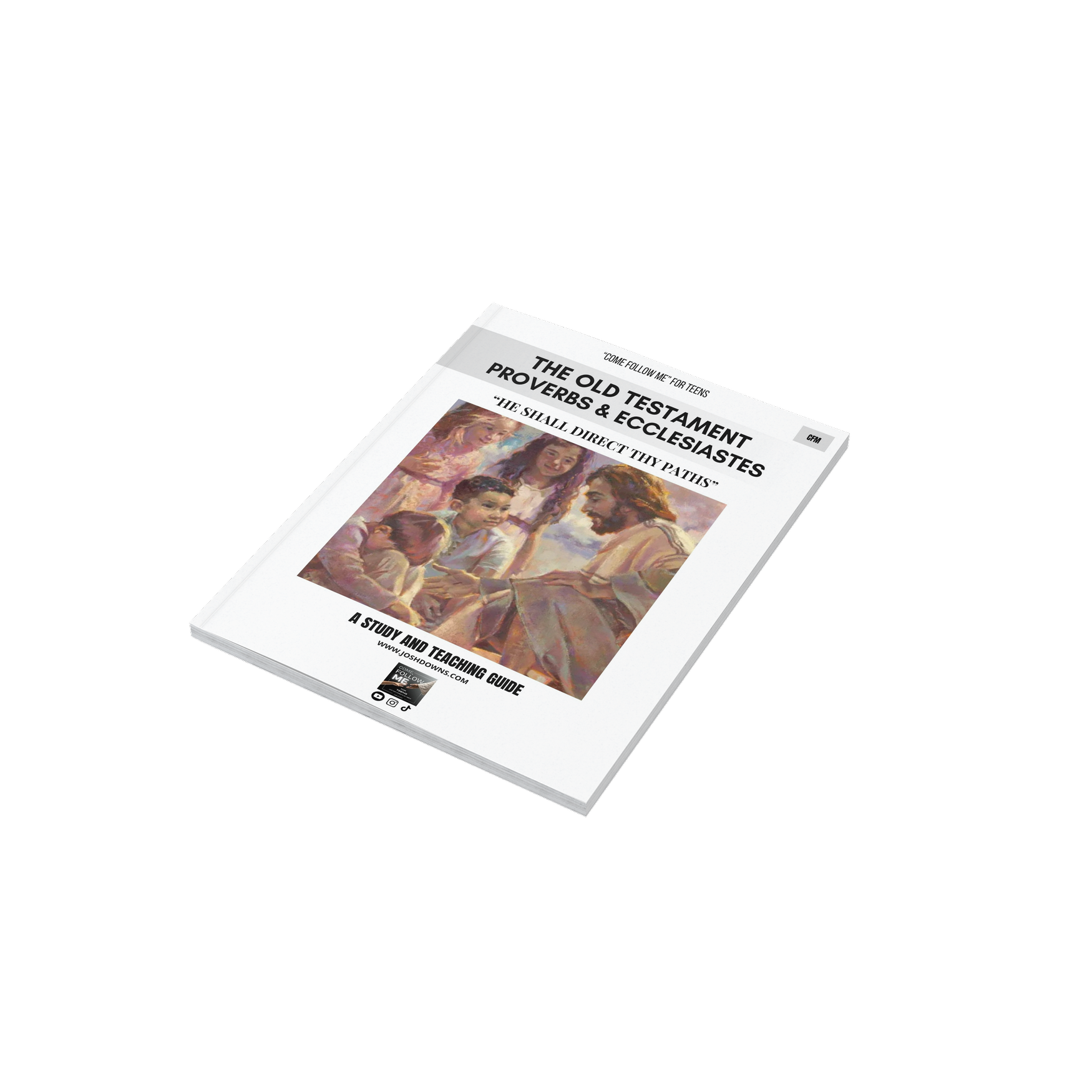
Proverbs and Ecclesiastes “He Shall Direct
Thy Paths”
This week’s Come Follow Me for Teens Study & Teaching Guide helps youth explore what it really means to trust God when they cannot see the whole path, when fear begins influencing their choices, and when the Lord’s timing is different from their own.
Trust the Lord’s Direction Even When You Don’t Understand the Path
Proverbs 3 teaches:
“Trust in the Lord with all thine heart; and lean not unto thine own understanding.”
Youth will explore the difference between using their understanding and relying on it so completely that they stop seeking God’s direction. Through memorable examples, including the Holland “wrong road” story and Elder Dieter F. Uchtdorf’s teaching that “the dots will connect,” they consider why the Lord’s path may not always make immediate sense.
Sometimes faith begins with being willing to admit:
Maybe I don’t see the whole picture yet.
The Fear of the Lord Can Hush Our Other Fears
Proverbs repeatedly teaches us to “fear the Lord.”
This principle helps youth understand that godly fear is not being terrified of God, but reverencing Him enough that His voice matters more than the opinions, pressures, and fears around us.
Using Elder David A. Bednar’s teaching “Therefore They Hushed Their Fears,” youth study Alma’s people and Joseph Smith’s experience with the lost 116 pages to discover how remembering the Lord can reduce the power fear has over our choices.
Sometimes God does not immediately remove the thing we fear. Instead, He helps our knowledge of Jesus Christ become greater than the fear in front of us.
Trusting God Includes Trusting His Timing and His Will
Ecclesiastes teaches:
“To every thing there is a season, and a time to every purpose under the heaven.”
Youth will explore why trusting God includes trusting not only His direction, but also His timing and His will.
Drawing on teachings from Elder Neal A. Maxwell, Doctrine and Covenants 123, and the “but if not” faith of Shadrach, Meshach, and Abed-nego, this principle helps youth distinguish between what lies within their power and what must eventually be placed into God’s hands.
The lesson closes with Moroni’s powerful declaration:
“I, Moroni, will not deny the Christ.”
We may not understand the path, we may still feel afraid, and we may still be waiting—but Jesus Christ remains worthy of our trust.
Inside This Guide
Brief background for the week
3 readiness / object lesson ideas
3 complete teaching principles
Scripture blocks and discovery questions
Journal and discussion questions
Expanded teaching explanations
Teachings from Church leaders
Personal experience and testimony prompts
Application questions and weekly actions
Christ-centered connections throughout
A ready-to-use “Teach This in 25 Minutes” lesson path
Designed For
Parents teaching teens at home, Youth Sunday School teachers, Young Men and Young Women leaders, teens studying independently, and anyone wanting a meaningful Come Follow Me discussion without starting from scratch.
This week’s guide helps youth learn to trust the Lord when they cannot see the whole road, remember Him when fear becomes overwhelming, and have faith in His timing and will even when life does not unfold the way they expected.
Weekly teaching resources for both Come Follow Me and For the Strength of Youth—without hours of prep.