Learning to Trust God Even When Life Doesn't Go as Planned
Daniel 3 | Come Follow Me for Teens
Have you ever prayed for something you wanted so badly that you could hardly imagine Heavenly Father answering your prayer any other way?
Maybe someone you love was sick.
Perhaps a friendship was falling apart, and you desperately wanted things to return to the way they used to be.
Maybe your family was experiencing something difficult, and you prayed that everything would somehow work out.
Or perhaps you were facing an opportunity that meant the world to you, and you asked Heavenly Father to help you succeed.
I think most of us have experienced moments like that.
We believe in God.
We know He has the power to perform miracles.
We've read stories in the scriptures about people being healed, protected, rescued, and delivered from extraordinary circumstances.
And so we pray.
We exercise faith.
We ask Heavenly Father for the blessings we hope to receive.
But what happens when things don't turn out the way we expected?
What happens when the person we prayed for doesn't recover?
When the friendship doesn't improve?
When our circumstances don't change?
Or when the answer to our prayer seems very different from the answer we hoped for?
I think one of the most important lessons we can learn about faith is found in three extraordinary words spoken by three young men living in Babylon.
"But if not."
Standing Before a King
In Daniel 3, King Nebuchadnezzar creates an enormous golden image.
He then commands the people of his kingdom to bow down and worship it whenever they hear the sound of certain musical instruments.
And he makes the consequences for disobedience unmistakably clear.
Anyone who refuses to worship the image will be thrown into a burning fiery furnace (Daniel 3:4–6).
Imagine living under that kind of threat.
There would be tremendous pressure to simply do what everyone else was doing.
After all, the king wasn't merely asking people to participate in a ceremony.
He was threatening their lives.
Now imagine that you're Shadrach, Meshach, or Abed-nego.
You believe in the living God.
You know His commandments.
And you understand that worshipping this image would mean turning away from your commitment to Him.
What would you do?
Perhaps you could convince yourself that bowing down didn't really mean anything.
Maybe you could reason that you were only doing it to avoid trouble.
You could tell yourself that God would understand because your life was in danger.
But these three young men refused to worship the image.
And eventually, they were brought before the king.
Nebuchadnezzar was furious.
He gave them another opportunity to obey his command and warned them that they would be thrown into the furnace if they refused.
Then he asked a question that I find fascinating.
In Daniel 3:15, the king essentially challenged them to identify the God who could rescue them from his power.
Think about the arrogance of that question.
Nebuchadnezzar believed he controlled their future.
He believed that he had the power to determine whether they lived or died.
And he couldn't imagine anyone being able to deliver them from his hands.
But listen to their response.
Our God Is Able
In Daniel 3:17, Shadrach, Meshach, and Abed-nego declared:
"Our God whom we serve is able to deliver us from the burning fiery furnace."
I love their confidence.
They knew God had power greater than the king.
They knew He could save them.
They knew that what appeared impossible to Nebuchadnezzar was entirely possible for Heavenly Father.
And they were willing to testify of that power while standing before the man who had threatened their lives.
But there's something even more remarkable about their answer.
In the very next verse, they said:
"But if not."
—Daniel 3:18
Three words.
And those three words reveal something extraordinary about their faith.
They believed God could deliver them.
But they didn't know whether He would.
And their willingness to remain faithful wasn't dependent upon receiving the miracle they hoped for.
Think about that.
Their faith wasn't simply confidence that everything would happen the way they wanted.
It was confidence in the God they had chosen to serve.
And I think there's an important difference between those two things.
Faith in God or Faith in an Outcome?
Sometimes we can begin to associate faith with the belief that if we pray sincerely enough, believe strongly enough, or do everything we're supposed to do, the outcome we want will eventually happen.
And I understand why.
We love hearing stories about miracles.
Someone receives a diagnosis, the family prays, and the person is healed.
A difficult situation seems impossible, but Heavenly Father opens an unexpected door.
A family faces a terrible challenge, and everything works out in a beautiful way.
Those stories are wonderful!
They can strengthen our faith in God's power.
But there's another kind of faith we need to develop as well.
The kind that trusts Him when the ending is different from what we hoped.
Let me share an experience taught by Elder David A. Bednar that has deeply influenced the way I think about faith.
Do You Have the Faith Not to Be Healed?
In a devotional titled That We Might "Not … Shrink", Elder Bednar shared the experience of a young couple he called John and Heather.
They had recently been married in the temple.
They were beginning their life together and looking forward to all the experiences that would come as they built a family.
But approximately three weeks after their marriage, their lives changed dramatically.
John was diagnosed with bone cancer.
The doctors also discovered cancer in his lungs, and his prognosis was frightening.
Imagine how devastating that must have been.
One moment, they're celebrating their marriage and looking forward to the future.
And just a few weeks later, they're facing the possibility that John might die.
They prayed.
They exercised faith.
They pleaded with Heavenly Father for healing.
Following months of treatment and surgery, John asked Elder Bednar for a priesthood blessing.
Elder Bednar agreed.
But before giving the blessing, he felt prompted to ask a question that neither he nor the young couple had expected.
Did John have the faith not to be healed?
Think about that question.
We often talk about having enough faith to receive a miracle.
But Elder Bednar was asking whether John had enough faith to trust God even if the miracle didn't come.
Was he willing to submit to Heavenly Father's will, even if that meant his life would end much earlier than he hoped?
That's an extraordinary question.
And I think it reveals something beautiful about the kind of faith Jesus Christ wants us to develop.
Elder Bednar explained that strong faith in the Savior includes accepting His will and timing, even when the outcome isn't what we want.
John and Heather still desperately wanted him to live.
They continued hoping and praying for healing.
But they began to understand that their faith in Jesus Christ could be greater than their desire for a particular outcome.
John's cancer eventually went into remission, but it later returned. Even after receiving the blessing they had hoped for, they continued facing difficult experiences that required them to trust Heavenly Father.
I find that especially meaningful.
Because faith isn't something we demonstrate only once.
It becomes part of the way we approach the challenges of mortality.
And sometimes the deepest expressions of faith come when we choose to trust Heavenly Father without knowing what will happen next.
Two Prophets, Two Different Outcomes
There's another connection to this story that I find particularly powerful.
Think about what happened to Shadrach, Meshach, and Abed-nego.
The king ordered the furnace heated even more intensely.
The three young men were bound and thrown into the flames.
And then something extraordinary happened.
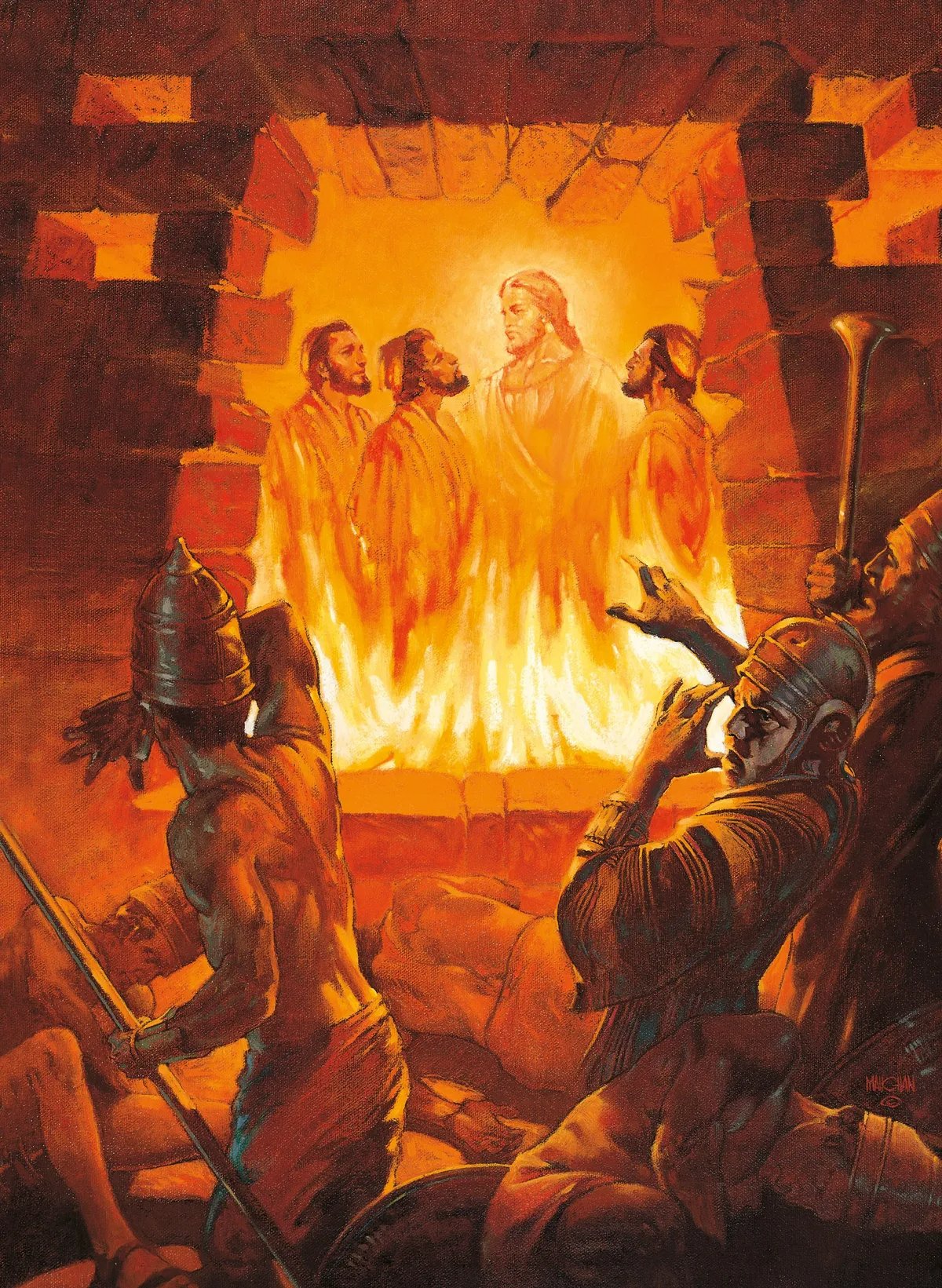
When the king looked into the furnace, he saw four figures walking in the fire.
The three young men were no longer bound.
And there was another figure with them (Daniel 3:24–25).
Eventually, Shadrach, Meshach, and Abed-nego emerged from the furnace unharmed.
Their clothing wasn't burned.
Their hair wasn't singed.
And the scriptures tell us that even the smell of fire hadn't passed upon them (Daniel 3:27).
What an extraordinary miracle!
God delivered them.
Now I want you to remember another prophet.
His name was Abinadi.
In Mosiah 11–17, Abinadi is commanded to call a wicked king and his people to repentance.
He courageously teaches the truth, even when doing so places his life in danger.
He bears powerful testimony of Jesus Christ.
He refuses to deny the message Heavenly Father has given him.
And eventually, King Noah orders him to be put to death.
Abinadi is burned by fire (Mosiah 17:13–20).
Now think about those two accounts.
Shadrach, Meshach, and Abed-nego refused to abandon their faith.
And God delivered them from the flames.
Abinadi refused to abandon his faith.
And he died in the flames.
Was Abinadi less faithful?
Did he believe in God less sincerely?
Was his testimony weaker?
Of course not.
His courage and devotion were extraordinary.
But the outcomes were different.
And I think there's something important for us to understand from that comparison.
Faithfulness is not measured by whether we receive the miracle we hoped for.
Sometimes Heavenly Father delivers His children from a difficult experience.
Sometimes He gives them strength to endure it.
And sometimes His greatest promises extend beyond mortality itself.
But in every circumstance, we can choose to trust Him.
When Your Prayers Are Answered Differently
Now I want to bring this principle into your own life.
You may never stand before an angry king.
You may never be threatened with a fiery furnace.
But there will be times when you desperately want Heavenly Father to change something.
Maybe you've prayed for your parents to stop arguing.
Perhaps you've asked Him to help someone you love overcome a serious illness.
Maybe you've pleaded for a friendship to be restored.
Or asked Him to help you feel accepted somewhere you feel completely alone.
Sometimes those situations improve.
And sometimes they don't improve as quickly or as completely as we hoped.
I want you to know something.
It's okay to feel disappointed.
It's okay to feel sad.
It's okay to wish things had turned out differently.
And it's okay to continue asking Heavenly Father for the blessing you're seeking.
Trusting His will doesn't mean pretending that difficult experiences aren't painful.
It means remembering who He is while we're experiencing them.
He is our Heavenly Father.
He loves us.
He knows us perfectly.
He sees circumstances and possibilities beyond our limited understanding.
And through Jesus Christ, He has prepared blessings that extend far beyond what we can presently see.
That doesn't mean we'll always understand His timing.
Sometimes we won't.
Nephi expressed something beautiful in 1 Nephi 11:17.
He acknowledged that he didn't know the meaning of all things, but he knew God loved His children.
I love that.
Because sometimes love is what we need to remember most when we don't understand the answer.
God Can Do Everything for Me
There's a thought I've come to love when teaching this principle.
It goes like this:
God can do everything for me … but if not … that won't change Him being everything to me.
I want you to think about those words.
God can heal the person I love.
But if not, I will still trust Him.
God can change my circumstances.
But if not, I will still turn to Him.
God can open the door I've been praying for.
But if not, I will still believe that He knows me and loves me.
God can rescue me from the difficulty I'm facing.
But if not, I will still choose to follow Jesus Christ.
I think that's the kind of faith Shadrach, Meshach, and Abed-nego demonstrated.
They knew God was able.
And they trusted Him regardless of what happened next.
What a remarkable relationship with Heavenly Father we could develop if we began approaching our challenges with that same confidence in Him.
Scripture
Daniel 3:13–18 — Shadrach, Meshach, and Abed-nego testify that God can deliver them, while remaining faithful even if He does not.
Daniel 3:19–27 — The three young men are cast into the furnace, and God delivers them.
Mosiah 17:13–20 — Abinadi remains faithful to his testimony of Jesus Christ even unto death.
1 Nephi 11:17 — Nephi knows God loves His children, even though he doesn't understand all things.
Mosiah 3:19 — We are invited to become willing to submit to the will of Heavenly Father.
Luke 22:39–44 — Jesus Christ submits His will to the Father in Gethsemane.
Alma 7:11–13 — Jesus Christ understands our pains, sicknesses, and infirmities and knows how to help us.
Reflection
What impresses you most about the response of Shadrach, Meshach, and Abed-nego to King Nebuchadnezzar?
Why are the words "But if not" such an extraordinary expression of faith?
What's the difference between trusting Heavenly Father and simply expecting a particular outcome?
What can Elder Bednar's question about having the faith not to be healed teach us about our relationship with God?
How does comparing the experiences of Abinadi and the three young men in the furnace deepen your understanding of faith?
Have you ever experienced a time when a prayer was answered differently than you hoped? What did that experience teach you?
Why is it important to remember God's love even when we don't understand His timing?
How might learning to say "But if not" help you face future challenges with greater confidence in Jesus Christ?
Today's Challenge
Practice trusting Heavenly Father with the outcome.
I want to invite you to do something meaningful today.
Find a quiet place where you can think and pray.
Then consider these three steps.
1. Identify something you're hoping for.
Think about a blessing you've been praying for or a situation you'd desperately like to see improve.
It doesn't need to be something dramatic.
Perhaps you're hoping for greater confidence.
A restored friendship.
Help with an important decision.
Healing for someone you love.
Or a change in a difficult circumstance.
Write it down.
2. Complete these two statements.
I believe Heavenly Father can ______.
But if not, I will still ______.
Take your time.
Think about what those statements mean to you.
You might discover that the second is more difficult to complete than the first.
That's okay.
Sometimes developing faith requires us to wrestle with questions and feelings we haven't fully understood before.
3. Pray with both faith and trust.
Tell Heavenly Father what you're hoping for.
Ask Him for the blessing you desire.
But also ask Him to help you trust His wisdom and love as you move forward.
You might pray for greater patience.
Strength.
Understanding.
Or peace.
Then think about this question:
How would my relationship with Heavenly Father change if I trusted Him just as deeply when His answer was different from the one I hoped for?
Remember, developing this kind of faith doesn't mean you have to stop hoping for miracles.
It means learning to trust the God who performs them.
Christ-Centered Thought
There's one more experience I want you to consider.
And I believe it's the most important connection we can make with the words "But if not."
It's the experience of Jesus Christ in the Garden of Gethsemane.
Think about the circumstances surrounding that sacred moment.
The Savior had spent His life doing the will of His Father.
He had healed the sick.
Comforted the brokenhearted.
Forgiven sinners.
Taught truth.
And demonstrated perfect obedience in every circumstance.
Now He was preparing to accomplish something that no other person could accomplish.
He would suffer for the sins, pains, sicknesses, and infirmities of Heavenly Father's children.
The weight of that suffering was beyond anything we can fully comprehend.
And as He entered the Garden of Gethsemane, He prayed.
In Luke 22:42, Jesus Christ said:
"Father, if thou be willing, remove this cup from me."
Think about those words.
The Savior was expressing the reality of the suffering He faced.
But then He added something extraordinary.
"Nevertheless not my will, but thine, be done."
I love those words.
Because they reveal the perfect example of the principle we've been studying.
Jesus Christ knew the power of His Father.
He knew that His Father could accomplish anything consistent with His eternal purposes.
But the Savior's commitment was to the Father's will.
And He willingly continued forward.
Through Gethsemane.
Through betrayal.
Through injustice.
Through the suffering of the cross.
And ultimately, through death itself.
Now think about what that means for you.
The Savior didn't simply teach us to trust Heavenly Father when life becomes difficult.
He showed us how.
He experienced pain more deeply than we can understand.
He knew what it meant to face terrible suffering.
And He willingly submitted to the Father's plan because He loved Him and because He loved us.
But there's something else I want you to remember.
The story of Jesus Christ doesn't end with His suffering or His death.
It continues with the empty tomb.
The Resurrection.
And the extraordinary victory He accomplished over sin and death.
Because of Jesus Christ, even death cannot defeat Heavenly Father's eternal plan for His children.
That is an incredible source of hope.
Now return for a moment to Daniel 3.
Remember that when Nebuchadnezzar looked into the furnace, he saw that the three young men weren't alone.
There was another figure with them.
I've always loved that picture.
Three faithful young men standing in the middle of a furnace.
And divine help present with them.
Sometimes when we pray, we hope Heavenly Father will keep us from ever having to enter the furnace.
And sometimes He does.
But there are other times when the difficulty remains.
When the challenge doesn't disappear.
When we have to continue moving forward through something painful.
During those experiences, I hope you'll remember the Savior.
He knows what it means to suffer.
He understands the sorrow and uncertainty that are part of mortality.
And because of His Atonement, He knows how to strengthen and comfort us in the middle of our trials.
The same Jesus Christ who walked through Gethsemane invites us to come unto Him when we are carrying heavy burdens (Matthew 11:28–30).
He can help us find peace even when our circumstances haven't changed.
He can give us strength when we feel inadequate.
He can help us forgive.
He can help us keep going when the future feels uncertain.
And He can reassure us that our Heavenly Father has not forgotten us.
One of the most beautiful things about the gospel is that its promises reach beyond the limits of mortality.
Not every difficulty will be resolved in the way we hope during this life.
But through the Atonement and Resurrection of Jesus Christ, Heavenly Father has made possible a future where death will be overcome, sorrow will eventually be swallowed up in joy, and His faithful children can receive blessings far greater than anything mortality can offer.
Think about that the next time you hear the words "But if not."
They aren't an expression of defeat.
They're an expression of trust.
They declare that our relationship with Heavenly Father is more important than our ability to predict what He will do next.
I hope you will develop faith in His power to perform miracles.
Pray for them.
Believe in them.
Recognize them.
And express gratitude when you receive them.
But I also hope you'll develop a relationship with Jesus Christ that remains strong when life is difficult.
The kind of relationship that allows you to say:
I know He can.
I believe in His power.
I trust His wisdom.
And regardless of what happens next, I will continue following Him.
Because God can do everything for me … but if not … that won't change Him being everything to me.
For more weekly devotionals and complete Come Follow Me resources designed specifically for teens, visit: