Isaiah 50–57 | “He Hath Borne Our Griefs,
and Carried Our Sorrows”
This week’s Come Follow Me for Teens Study & Teaching Guide helps youth understand what Jesus Christ offers when life becomes too heavy, when they find themselves needing to repent again, and when the world promises relief or happiness but leaves them spiritually thirsty.
Isaiah describes a Savior who does not save us from a distance.
He bears our griefs.
His kindness is everlasting.
And He invites everyone who thirsts to come to Him.
Throughout the guide, youth will explore three powerful truths:
When life becomes heavy, Christ carries what I can’t.
When I need to come back again, His kindness does not run out.
When my soul is thirsty, I don’t have to settle for an imitation.
“He Hath Borne Our Griefs, and Carried Our Sorrows”
Isaiah 53 gives one of the clearest descriptions of the Savior’s Atonement anywhere in the Old Testament:
“Surely he hath borne our griefs, and carried our sorrows.”
But Isaiah also says:
“He was wounded for our transgressions, he was bruised for our iniquities.”
Youth will explore an important distinction between the burdens that come simply because mortality is hard and the burdens connected to choices we make.
Jesus Christ understands both.
Using a simple water-bottle object lesson, youth will consider why some burdens become almost unbearable—not necessarily because they were enormous when we first picked them up, but because we have been trying to carry them alone for too long.
The guide also connects Isaiah 53 with Adam and Eve hiding from God after their transgression and the Lord’s question:
“Adam, where art thou?”
Rather than seeing repentance as God trying to expose or embarrass us, youth will explore a different possibility:
Repentance is an invitation to come out of hiding.
Jesus Christ is not another weight being added to our lives.
He is the reason we do not have to carry everything alone.
“With Everlasting Kindness Will I Have Mercy on Thee”
Isaiah gives another remarkable promise:
“With everlasting kindness will I have mercy on thee.”
For young people who sincerely want to follow Jesus Christ but become discouraged when they struggle with the same weakness again, these verses can provide tremendous hope.
The guide connects Isaiah’s promise with the Lord’s words in Mosiah:
“As often as my people repent will I forgive them.”
Youth will consider what the words “as often” teach about the Savior’s willingness to forgive and why repeated weakness does not automatically mean failed repentance.
The guide carefully distinguishes sincere repentance from casually planning to sin again. The focus is on the disciple who genuinely wants to change, falls, gets back up, turns toward Christ, and continues trying.
Using the story of Alma the Younger, youth will explore why God preserved Alma’s difficult past instead of only telling us the person he eventually became.
His story becomes evidence that Jesus Christ can do far more than help already-good people improve a little.
He can redeem people.
Isaiah 57 adds one of the most hopeful statements in these chapters:
“I have seen his ways, and will heal him.”
God’s mercy is not based on Him knowing less about us.
He knows more—and still invites us to be healed.
“Wherefore Do Ye Spend … for That Which Satisfieth Not?”
Isaiah 55 begins with an invitation:
“Every one that thirsteth, come ye to the waters.”
Youth will explore the idea that spiritual thirst is not necessarily the problem. We all want things like love, belonging, peace, forgiveness, confidence, purpose, relief, and a sense that our lives matter.
The question is:
Where are we trying to satisfy those needs?
Isaiah asks why we continue spending ourselves on something that “satisfieth not.”
For teenagers, we spend far more than money. We spend our time, attention, thoughts, emotional energy, identity, and sometimes even our sense of worth trying to find something that will finally make us feel full.
Using the story of Moses recognizing Satan’s imitation after first experiencing God’s presence, youth will explore an important principle:
The best defense against spiritual counterfeits is not simply becoming an expert on every counterfeit. It is becoming deeply familiar with the real thing.
The guide also connects Isaiah’s invitation with the Savior’s conversation with the woman at the well:
“Whosoever drinketh of this water shall thirst again.”
Some things provide temporary relief but continually demand another drink—another scroll, another compliment, another achievement, another person validating us, or another escape.
Jesus Christ offers something deeper.
Youth will be invited to consider what they are actually thirsty for and where they are currently trying to drink.
The more we taste what is real, the easier it becomes to recognize what isn’t.
Inside This Guide
Brief background for Isaiah 50–57
3 readiness / object lesson ideas
3 complete teaching principles
Carefully selected scripture blocks
Scripture-based discovery questions
Teacher-friendly explanations
Journal and discussion questions
Teachings from Church leaders
Personal experience and testimony prompts
Experience-based application questions
Meaningful weekly application actions
Christ-centered connections throughout
A ready-to-use “Teach This in 25 Minutes” lesson path
Simple ideas for teaching these truths naturally at home
Designed For
Parents teaching teens at home, Youth Sunday School teachers, Young Men and Young Women leaders, teens studying independently, and anyone wanting a meaningful Come Follow Me discussion without starting from scratch.
This week’s guide helps youth discover that Jesus Christ meets us in three places we all eventually find ourselves: when the burden becomes heavy, when we need another chance, and when our souls are searching for something that will truly satisfy.
He carries our griefs and sorrows. His kindness is everlasting. And He still invites us to come to the waters.
Isaiah 50–57 | “He Hath Borne Our Griefs,
and Carried Our Sorrows”
This week’s Come Follow Me for Teens Study & Teaching Guide helps youth understand what Jesus Christ offers when life becomes too heavy, when they find themselves needing to repent again, and when the world promises relief or happiness but leaves them spiritually thirsty.
Isaiah describes a Savior who does not save us from a distance.
He bears our griefs.
His kindness is everlasting.
And He invites everyone who thirsts to come to Him.
Throughout the guide, youth will explore three powerful truths:
When life becomes heavy, Christ carries what I can’t.
When I need to come back again, His kindness does not run out.
When my soul is thirsty, I don’t have to settle for an imitation.
“He Hath Borne Our Griefs, and Carried Our Sorrows”
Isaiah 53 gives one of the clearest descriptions of the Savior’s Atonement anywhere in the Old Testament:
“Surely he hath borne our griefs, and carried our sorrows.”
But Isaiah also says:
“He was wounded for our transgressions, he was bruised for our iniquities.”
Youth will explore an important distinction between the burdens that come simply because mortality is hard and the burdens connected to choices we make.
Jesus Christ understands both.
Using a simple water-bottle object lesson, youth will consider why some burdens become almost unbearable—not necessarily because they were enormous when we first picked them up, but because we have been trying to carry them alone for too long.
The guide also connects Isaiah 53 with Adam and Eve hiding from God after their transgression and the Lord’s question:
“Adam, where art thou?”
Rather than seeing repentance as God trying to expose or embarrass us, youth will explore a different possibility:
Repentance is an invitation to come out of hiding.
Jesus Christ is not another weight being added to our lives.
He is the reason we do not have to carry everything alone.
“With Everlasting Kindness Will I Have Mercy on Thee”
Isaiah gives another remarkable promise:
“With everlasting kindness will I have mercy on thee.”
For young people who sincerely want to follow Jesus Christ but become discouraged when they struggle with the same weakness again, these verses can provide tremendous hope.
The guide connects Isaiah’s promise with the Lord’s words in Mosiah:
“As often as my people repent will I forgive them.”
Youth will consider what the words “as often” teach about the Savior’s willingness to forgive and why repeated weakness does not automatically mean failed repentance.
The guide carefully distinguishes sincere repentance from casually planning to sin again. The focus is on the disciple who genuinely wants to change, falls, gets back up, turns toward Christ, and continues trying.
Using the story of Alma the Younger, youth will explore why God preserved Alma’s difficult past instead of only telling us the person he eventually became.
His story becomes evidence that Jesus Christ can do far more than help already-good people improve a little.
He can redeem people.
Isaiah 57 adds one of the most hopeful statements in these chapters:
“I have seen his ways, and will heal him.”
God’s mercy is not based on Him knowing less about us.
He knows more—and still invites us to be healed.
“Wherefore Do Ye Spend … for That Which Satisfieth Not?”
Isaiah 55 begins with an invitation:
“Every one that thirsteth, come ye to the waters.”
Youth will explore the idea that spiritual thirst is not necessarily the problem. We all want things like love, belonging, peace, forgiveness, confidence, purpose, relief, and a sense that our lives matter.
The question is:
Where are we trying to satisfy those needs?
Isaiah asks why we continue spending ourselves on something that “satisfieth not.”
For teenagers, we spend far more than money. We spend our time, attention, thoughts, emotional energy, identity, and sometimes even our sense of worth trying to find something that will finally make us feel full.
Using the story of Moses recognizing Satan’s imitation after first experiencing God’s presence, youth will explore an important principle:
The best defense against spiritual counterfeits is not simply becoming an expert on every counterfeit. It is becoming deeply familiar with the real thing.
The guide also connects Isaiah’s invitation with the Savior’s conversation with the woman at the well:
“Whosoever drinketh of this water shall thirst again.”
Some things provide temporary relief but continually demand another drink—another scroll, another compliment, another achievement, another person validating us, or another escape.
Jesus Christ offers something deeper.
Youth will be invited to consider what they are actually thirsty for and where they are currently trying to drink.
The more we taste what is real, the easier it becomes to recognize what isn’t.
Inside This Guide
Brief background for Isaiah 50–57
3 readiness / object lesson ideas
3 complete teaching principles
Carefully selected scripture blocks
Scripture-based discovery questions
Teacher-friendly explanations
Journal and discussion questions
Teachings from Church leaders
Personal experience and testimony prompts
Experience-based application questions
Meaningful weekly application actions
Christ-centered connections throughout
A ready-to-use “Teach This in 25 Minutes” lesson path
Simple ideas for teaching these truths naturally at home
Designed For
Parents teaching teens at home, Youth Sunday School teachers, Young Men and Young Women leaders, teens studying independently, and anyone wanting a meaningful Come Follow Me discussion without starting from scratch.
This week’s guide helps youth discover that Jesus Christ meets us in three places we all eventually find ourselves: when the burden becomes heavy, when we need another chance, and when our souls are searching for something that will truly satisfy.
He carries our griefs and sorrows. His kindness is everlasting. And He still invites us to come to the waters.

 Image 1 of 8
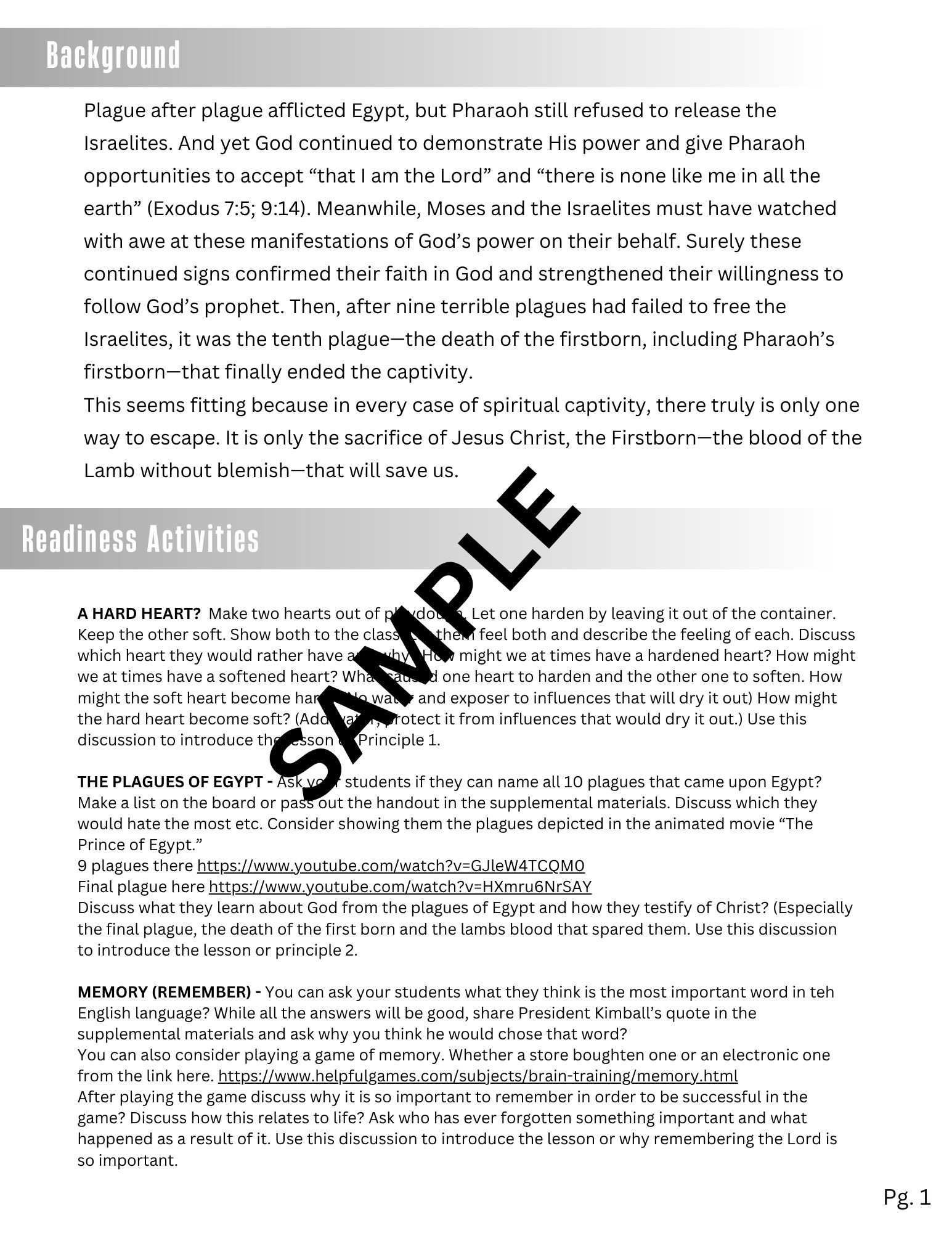 Image 2 of 8
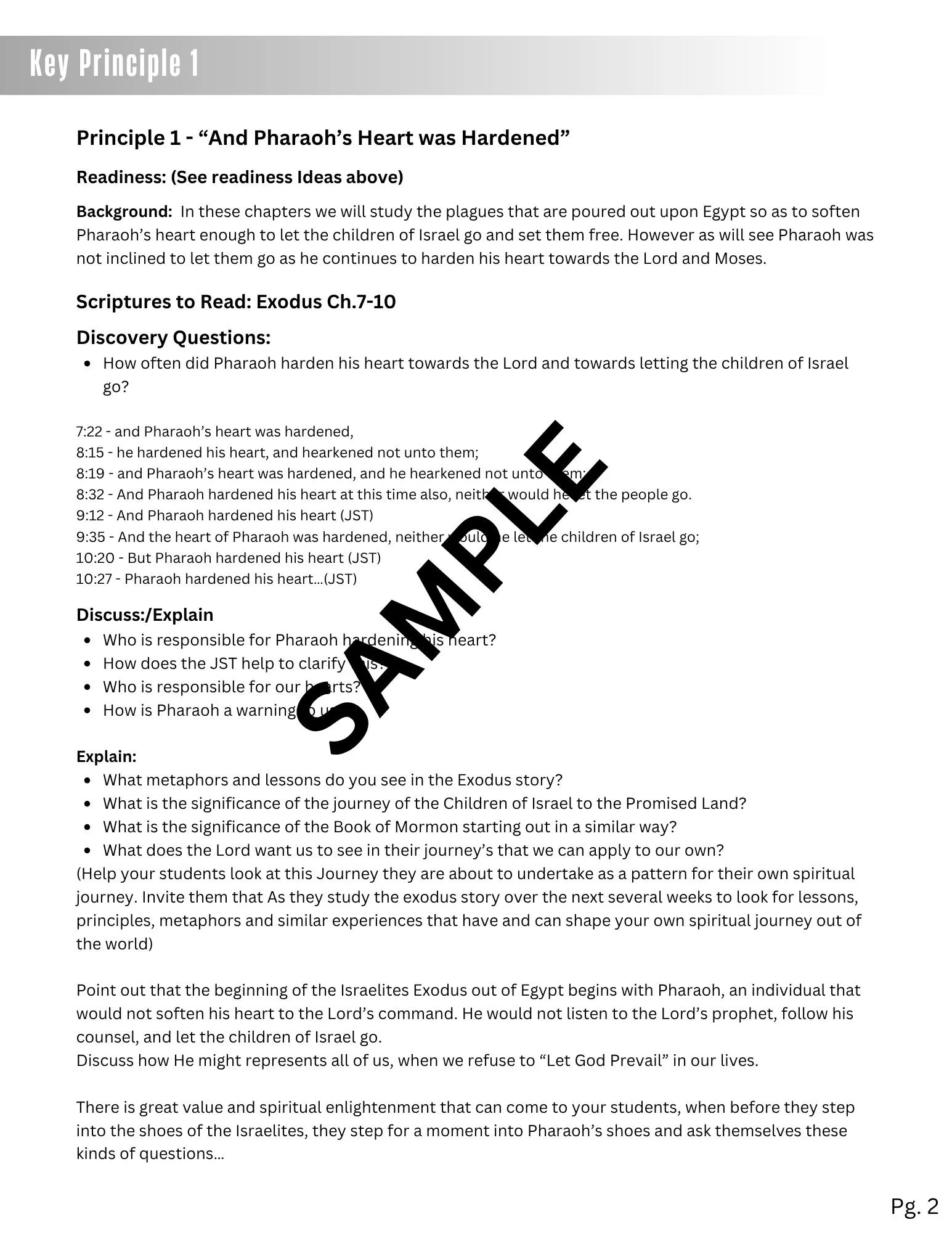 Image 3 of 8
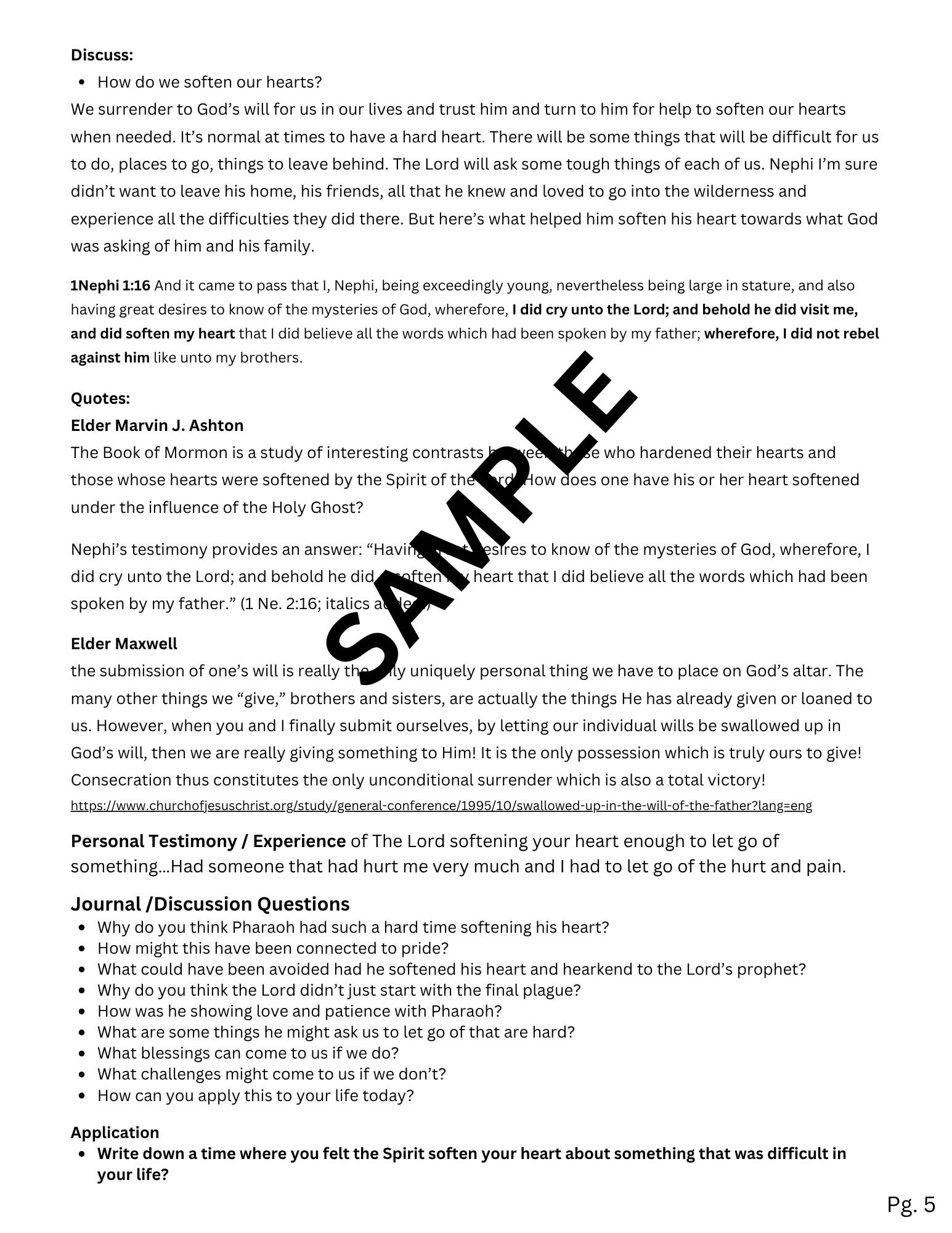 Image 4 of 8
 Image 5 of 8
 Image 6 of 8
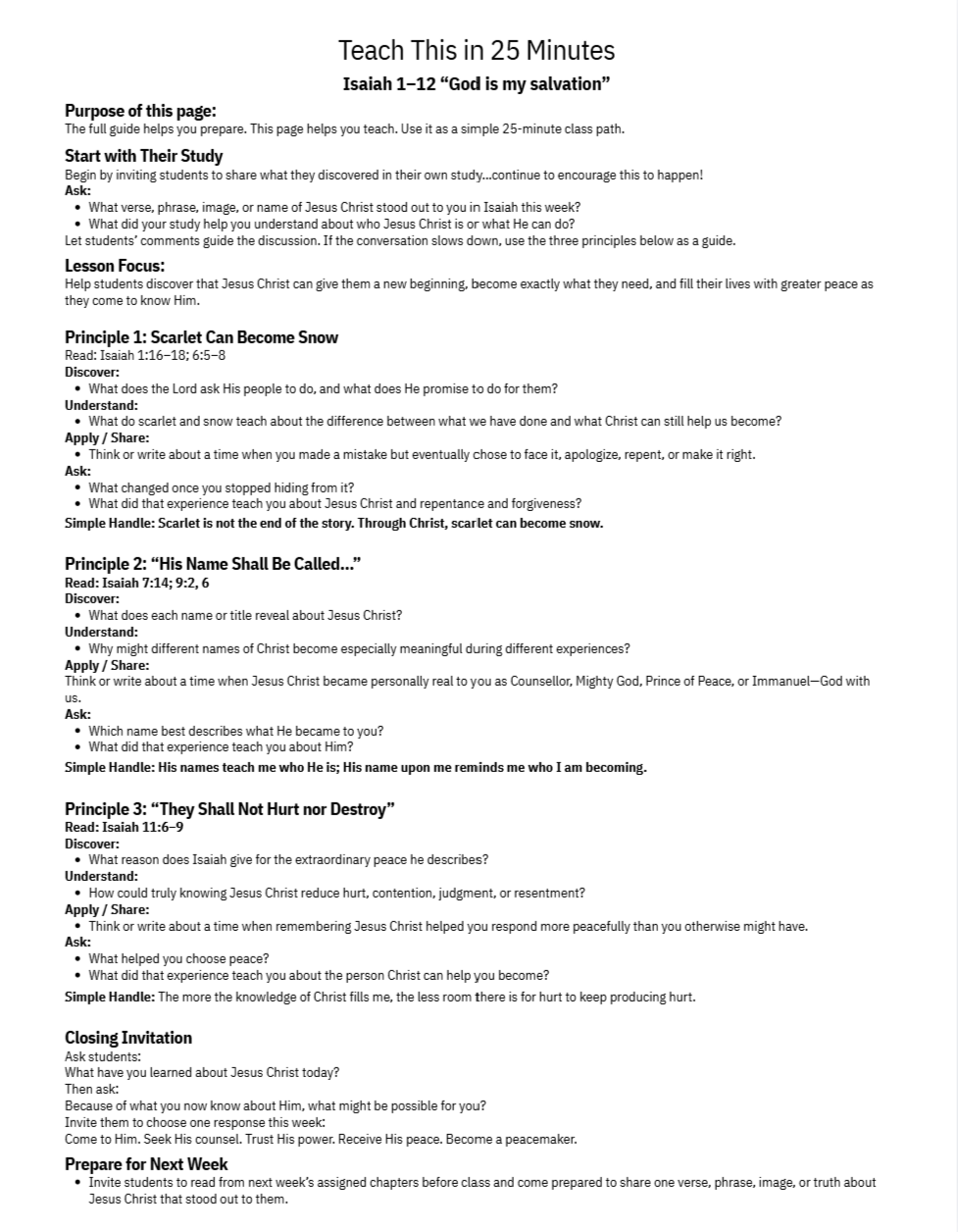 Image 7 of 8
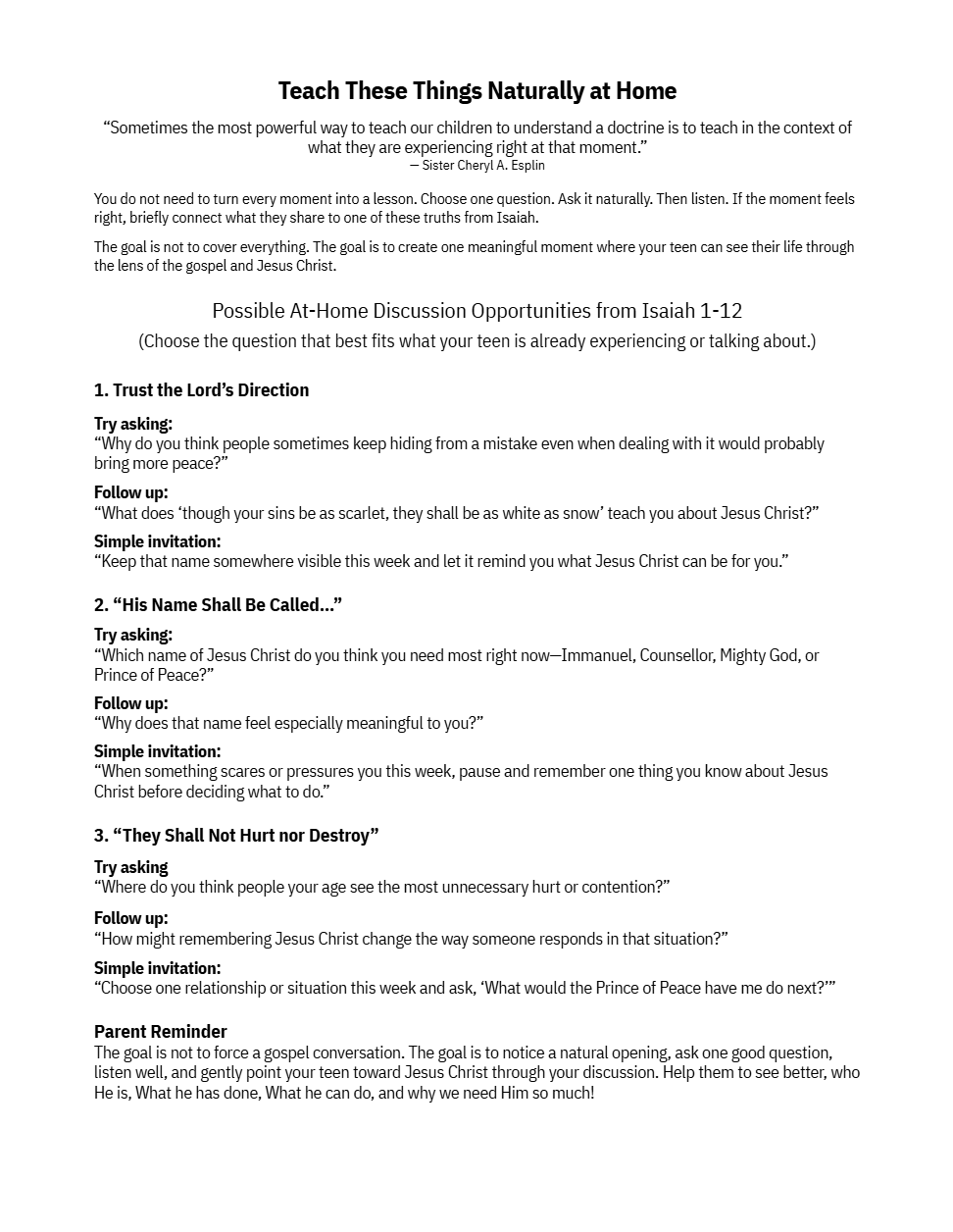 Image 8 of 8